 Automation
Automated Resin 3D Printing for Industrial Production
Automated resin 3D printing has crossed the threshold from prototyping bench to production floor. Here is what that transition actually requires — and how JENI delivers it.

 Additive Manufacturing · At Scale
JENI runs continuously and unattended, producing millions of plastic parts at a cost that competes with injection molding. No molds or minimum order quantities. No compromise on quality.
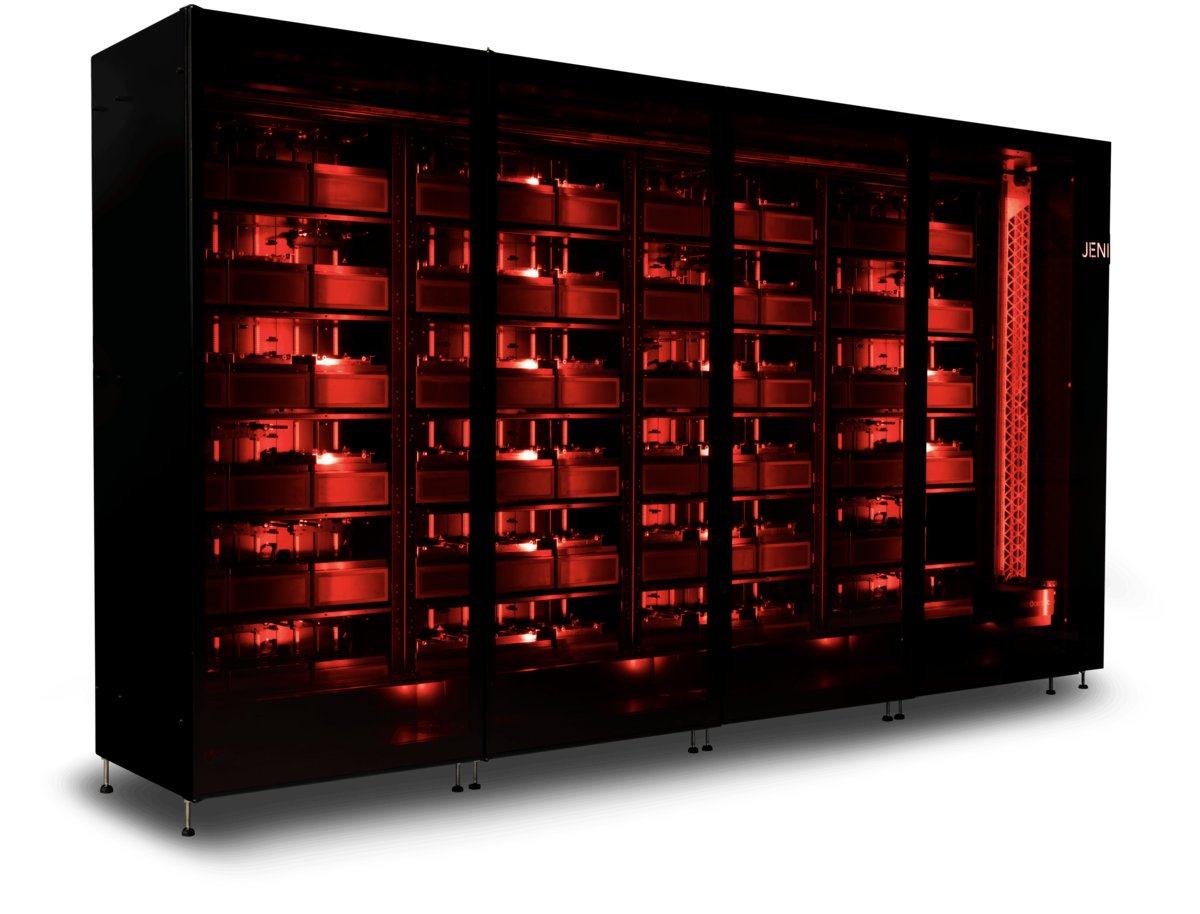
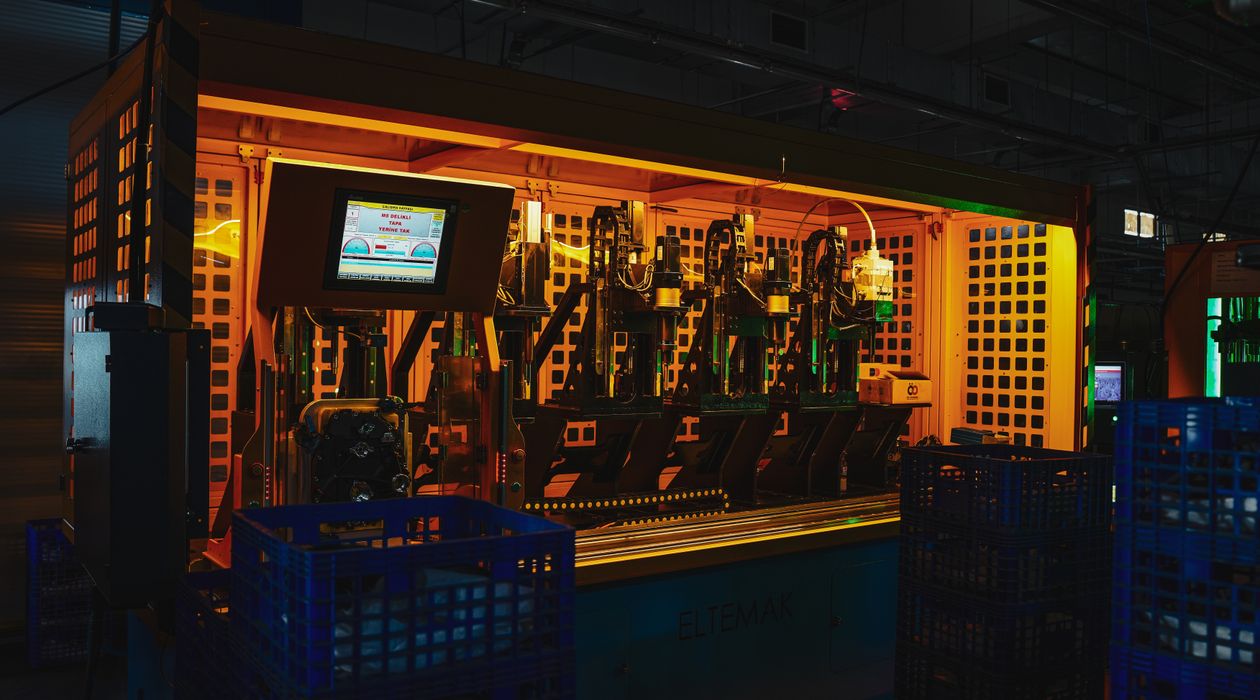
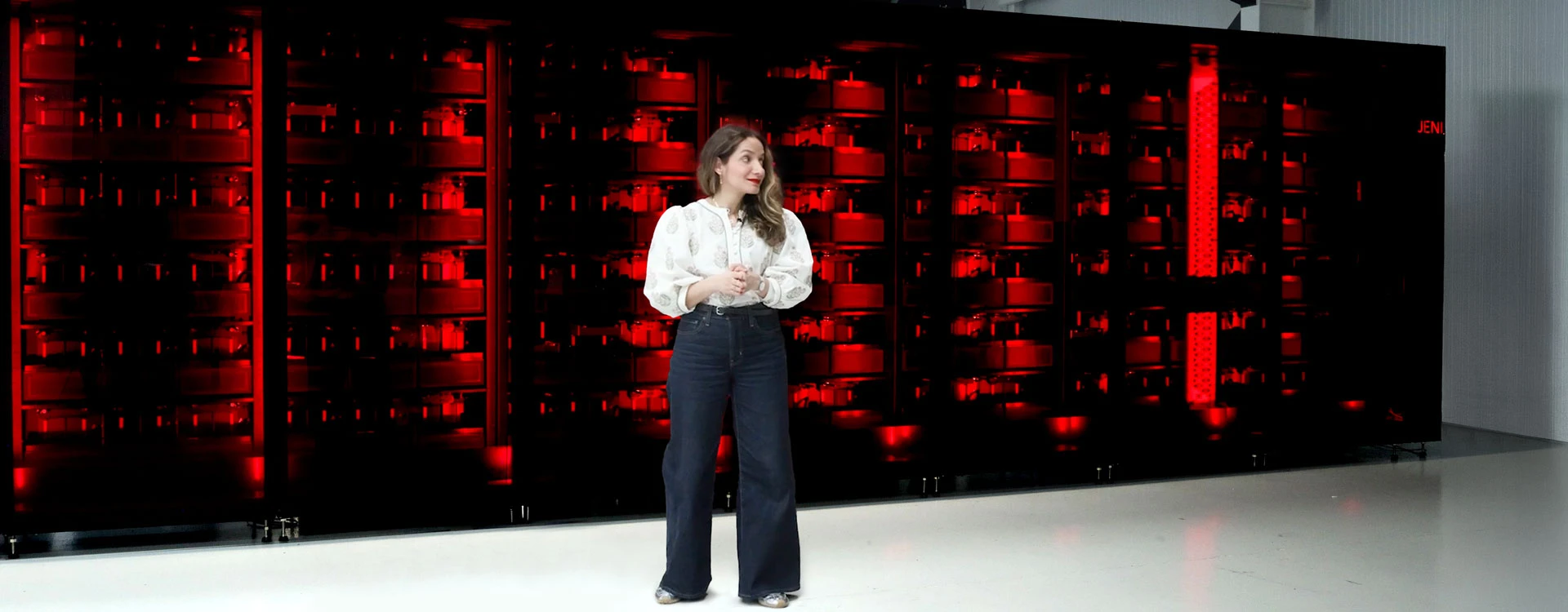
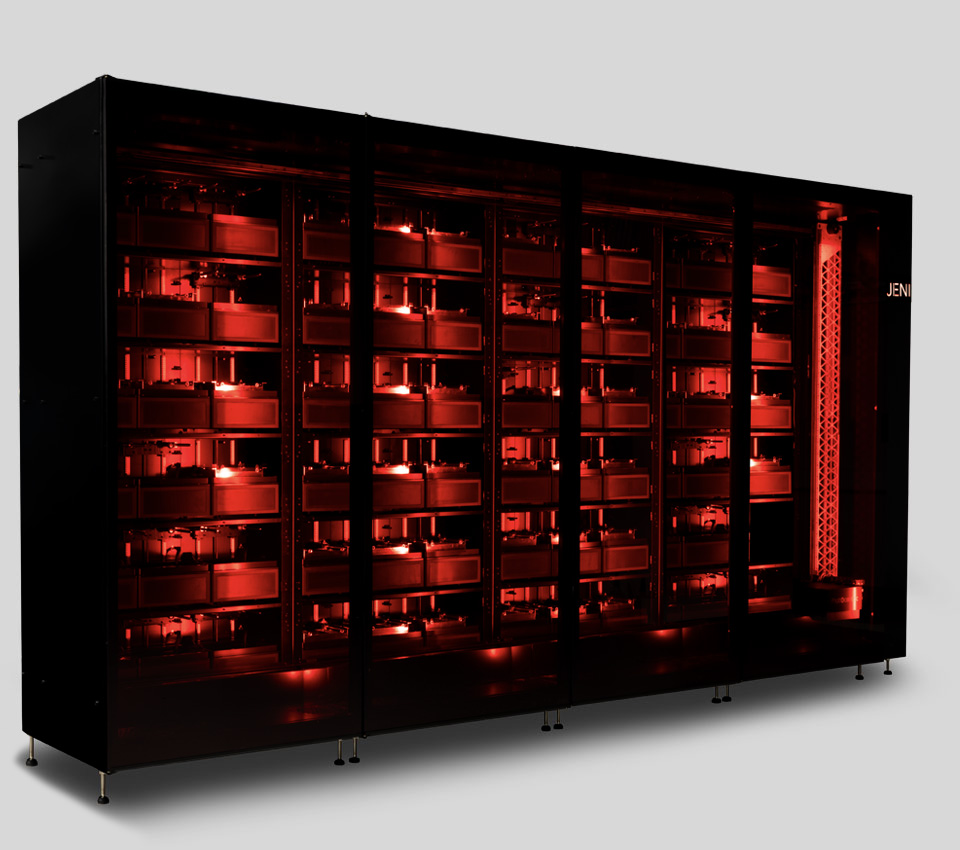
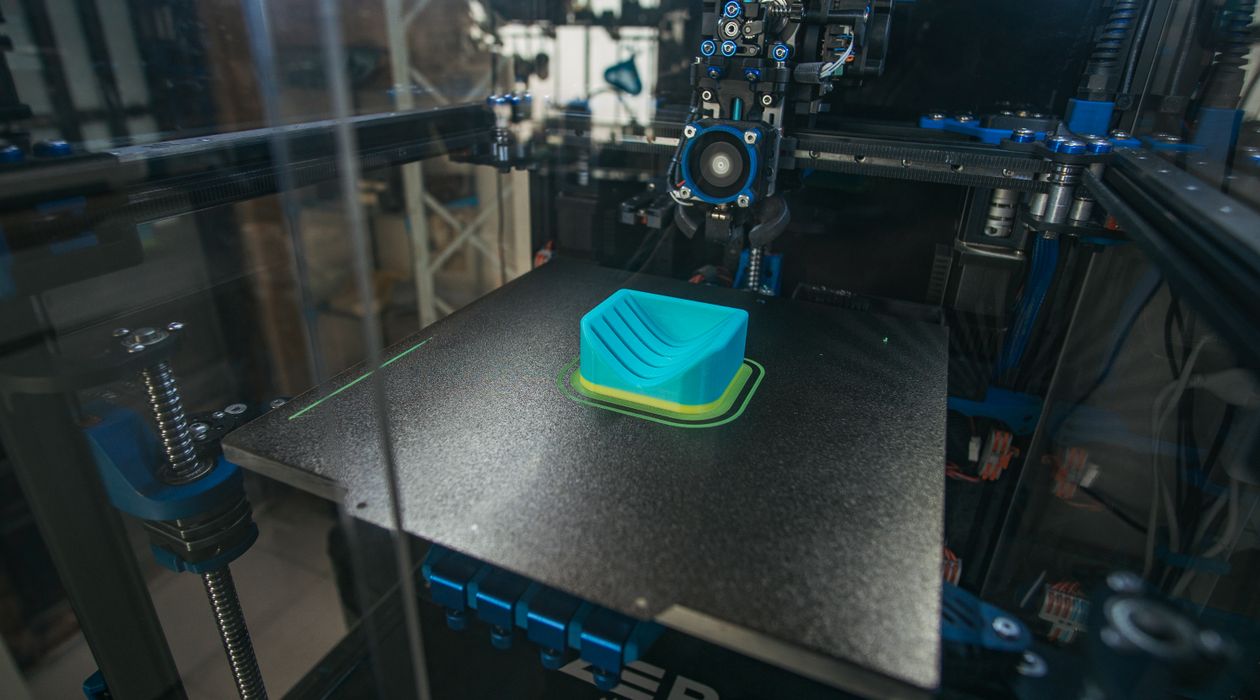
JENI automates the production of plastic parts using multiple LCD 3D print and post-processing nodes connected by high-speed robotics. The high-speed gantry moves at 3 meters per second, delivering a platform of parts every 20 seconds — around 1 ton of product per day.

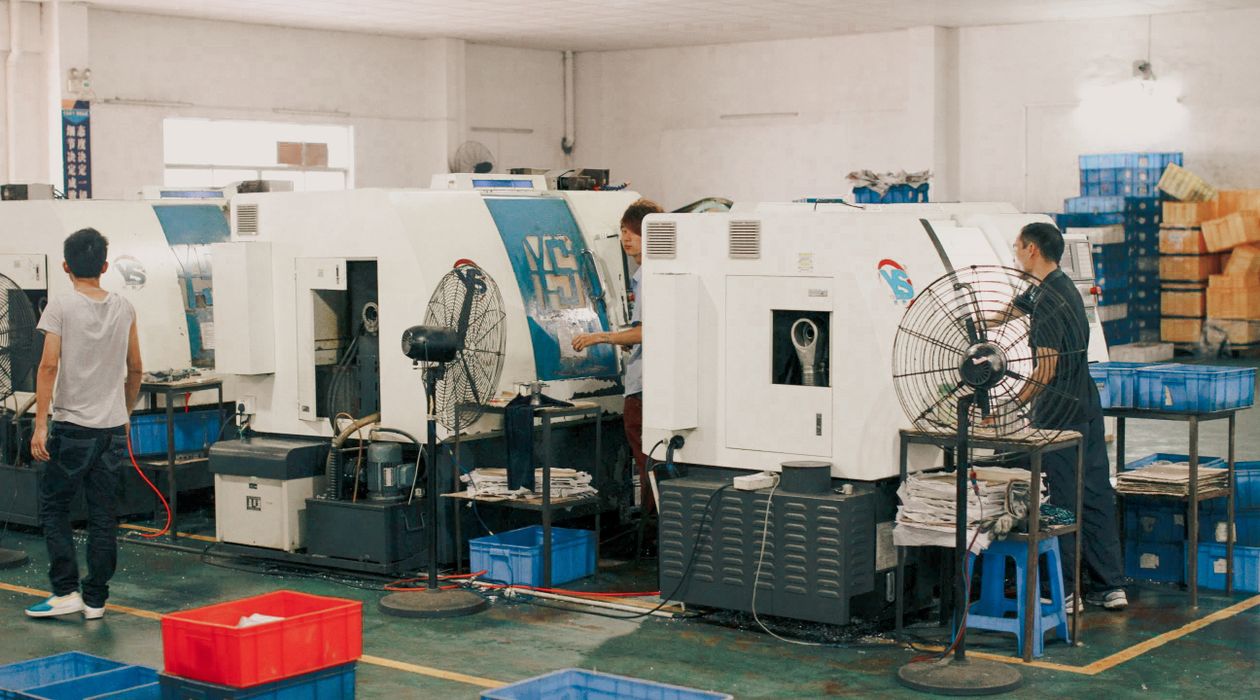
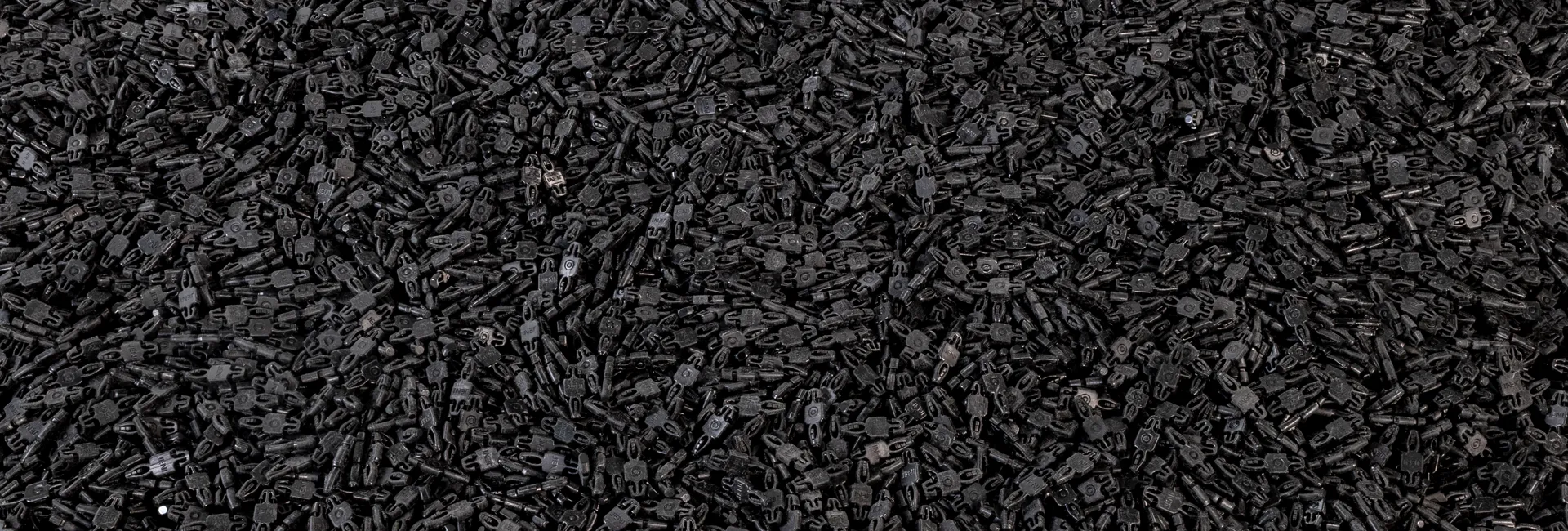
It sets the minimum order quantity. It fixes the design. It decides which parts are worth making at all. For thirty years, additive manufacturing has been told it will never make the parts the world actually runs on — the clips, caps, connectors and grommets produced in their millions.

JENI automates the production of plastic parts using high-resolution 3D printers and post-processing nodes connected by high-speed robotics. Every job carries its own process recipe. Parts are delivered every 20 seconds, continuously, 24/7 — with materials formulated in-house at a price that stands up against molding.

JENI runs 24/7 lights-out. Each job carries its own process recipe rather than repeating a fixed one. The gantry collects the next free print platform and moves it to the matching node automatically.

Start with one control and one process module, then add more as you expand. The largest install today runs 16 modules with 288 nodes. Each module is configurable to your needs.
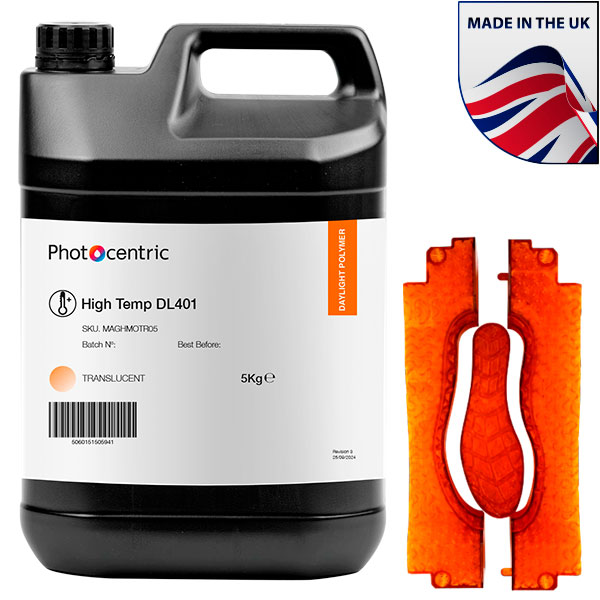
A different resin on each print node. Photocentric formulates its own photopolymers — including DL902 Plant-Based with 52% bio-based raw material — so cost and quality are directly in our control.

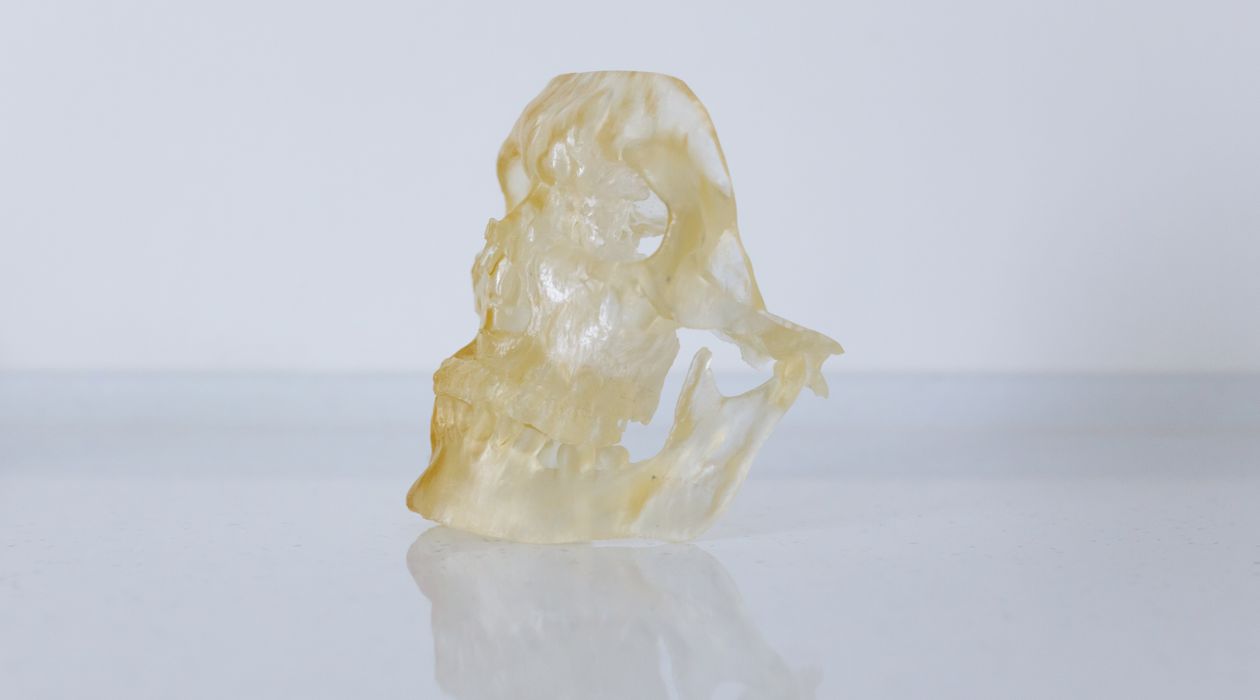
Pixel pitch of 24.8µm x 16.8µm delivers fine features, text, and surface finish at a level most production AM cannot reach. Part finish is on a par with injection molding — no draft angles, split lines, or ejector pin marks.

An independent cradle-to-gate study by the Manufacturing Technology Centre found JENI produces 1.322 gCO2e per part versus 8.809 gCO2e for injection molding — an 84.9% reduction, mostly from eliminating material waste.

JENI uses machine learning to optimize each job for cost, speed, carbon footprint, or quality by making tiny adjustments to process parameters and monitoring the quality of the output — without human input.
A platform of parts every 20 seconds, around 1 ton per day
Superior strength and chemical resistance
Rapid go to market, flexible & low start-up costs
Process optimization and predictive maintenance
Live carbon footprint calculation
Integration into Manufacturing Execution Systems
Extend laterally and even vertically
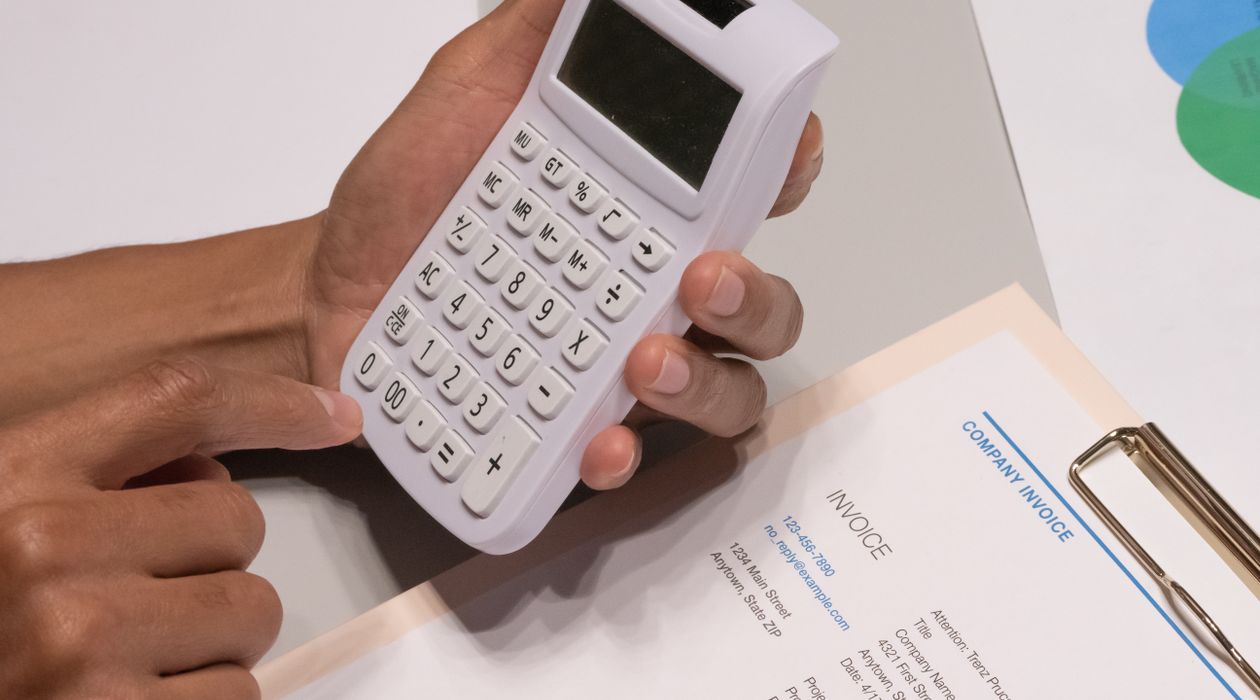
Total Cost of Ownership comprises mainly of material costs
Design for Additive Manufacturing enabled designs
Fully autonomous operation with no manual intervention required
JENI is an autonomous additive manufacturing system that runs continuously and unattended, producing finished plastic parts every 20 seconds. Unlike a standalone 3D printer, JENI integrates print nodes with automated post-processing robotics, so each job carries its own process recipe and the system runs 24/7 without manual intervention.
Yes. When you build a full production costing — material, labor, energy, tooling, scrap, storage, obsolescence, and the cost of not having the right part when needed — the answer has repeatedly come out in favor of printing on JENI. Customers are already printing millions of some of the lowest-value parts, where fractions of a cent decide the business case.
Output depends on part size, geometry, and layer thickness. The largest installation to date — 16 modules with 288 nodes — produces 148,000 parts per day at around 40mm in size. A single-module system can produce up to 1.2 million small, accurate parts per day with 780 parts per print platform.
JENI is an open-materials platform that can run a different resin on each print node. Photocentric formulates its own photopolymers, including Durable DL902 Plant-Based, an ABS-like engineering resin with 52% bio-based raw material. An independent cradle-to-gate study found JENI produces 84.9% less CO2 per part than injection molding.
Yes, JENI is available to order today with a lead time of 3 months to Factory Acceptance Test. The process starts with evaluating your parts and settling on the right materials, then we install on site, run the system against your parts, train your team, and support it under an ongoing service agreement.
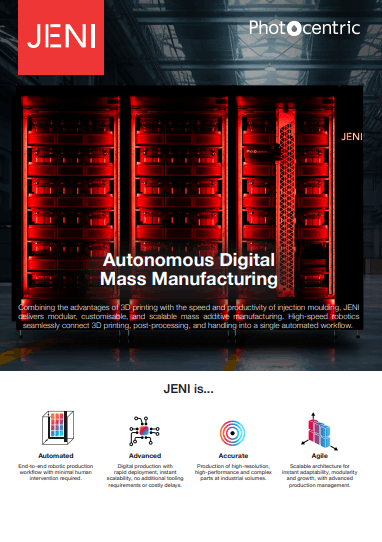
Full specifications, configurations, and capabilities in one printable PDF. No sign-up required.
Contact us about your application. We will evaluate your parts for JENI and compare cost and volume against injection molding.
Talk to our team Visit the 3D Shop